JovAI
AI for the curious mind
🧠 Welcome to JovAI: AI for the Curious Mind
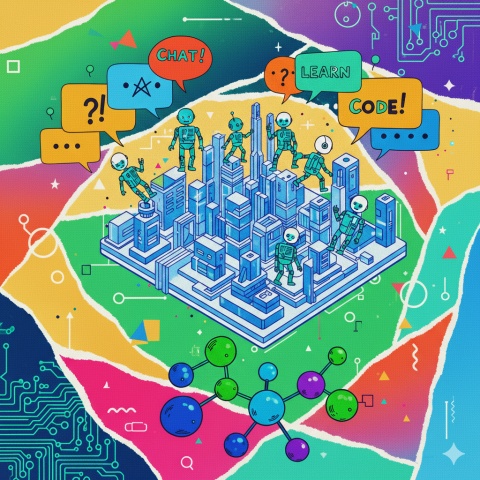
Collage of AI concepts: neural networks, robots, molecules, and conversation

Artificial intelligence is reshaping the world around us — from the way doctors diagnose diseases to the way we talk to our phones. But most coverage of AI falls into two camps: breathless hype or doomsday warnings. We think there's a better way.

JovAI is for people who are curious about AI and want to understand what's really happening — the breakthroughs, the limitations, the opportunities, and yes, the genuine risks — all explained clearly, without jargon, and always grounded in facts.

🔍 What You'll Find Here

JovAI covers the full landscape of artificial intelligence — not just the chatbots making headlines, but the entire ecosystem of machine learning, computer vision, scientific AI, robotics, and more:

  • How It Works: Clear, jargon-free explanations of the technology behind AI systems. We believe understanding the basics makes the news make sense.
  • Real Applications: From protein folding to weather prediction to medical diagnosis — AI is already changing specific fields in measurable ways. We cover what's actually deployed, not just what's promised.
  • Society & Ethics: AI affects jobs, creativity, privacy, and fairness. We explore these topics using real data and documented cases, not speculation.
  • The Big Picture: Where is AI headed? We track trends and developments across the industry, from open-source movements to regulation.

📐 Our Editorial Approach

Every article on JovAI follows three principles:

  • Grounded in facts: We cite real numbers, name real systems, and reference actual deployments. If something is speculative, we say so.
  • Optimistic but honest: AI is producing genuinely exciting results. We celebrate that — while also covering the real problems with equal rigor.
  • Accessible depth: We explain things clearly enough for anyone to follow, but include enough technical substance that you'll know what to search for if you want to go deeper.

🚀 Who Is This For?

JovAI is for anyone who wants to understand AI without needing a computer science degree. If you've ever wondered how ChatGPT works, whether self-driving cars are safe, or what AlphaFold actually did — you're in the right place.

We're not writing for developers or researchers (though they're welcome). We're writing for curious people who want to be informed participants in one of the most important technological shifts in history.


Start exploring! We recommend beginning with "What Is Machine Learning, Really?" for a foundation, then diving into whichever topic catches your eye.

💬 How ChatGPT Actually Works: A Plain-English Guide
Illustration of a transformer neural network with attention connections

ChatGPT can write essays, debug code, explain quantum physics, and compose poetry. It feels like magic — or intelligence. But under the hood, it's a sophisticated pattern-matching system built on a surprisingly elegant mathematical foundation called the transformer architecture. Understanding how it works demystifies both its impressive abilities and its well-known failures.

While ChatGPT (made by OpenAI) is the best-known example, it is just one of many AI chatbots powered by large language models (LLMs). Other prominent examples include Google's Gemini, Anthropic's Claude, xAI's Grok, Meta's Llama-based assistants, and Mistral's Le Chat. They all work on the same fundamental principles described below — the differences lie in their training data, fine-tuning approaches, and specific capabilities.

The Core Idea: Predicting the Next Word

At its most fundamental level, an AI chatbot does one thing: given a sequence of words, it predicts what word comes next. That's it. Every response it generates is produced one word (actually one "token") at a time, each chosen based on everything that came before it.

This might sound too simple to produce intelligent-seeming text, but consider: if you can predict the next word well enough in any context — scientific papers, casual conversation, legal documents, poetry — you effectively need to understand the structure and meaning of language itself.

Tokens: How AI Reads Text

Before processing text, an LLM breaks it into tokens — chunks that are usually common words or word fragments. The word "understanding" might be split into "under" + "standing." The entire English language can be represented with about 50,000 tokens. Each token is converted into a list of numbers (a "vector") that captures something about its meaning and usage.

The Transformer: Paying Attention

The breakthrough that made modern AI language models possible was the transformer, introduced in a 2017 Google paper titled "Attention Is All You Need." The key innovation is the attention mechanism — a way for the model to figure out which other words in a sentence are relevant to understanding each word.

For example, in the sentence "The cat sat on the mat because it was tired," the attention mechanism helps the model figure out that "it" refers to "the cat," not "the mat." It does this by computing a relevance score between every pair of words in the input.

A large model like GPT-4 has hundreds of billions of these attention connections organized into layers. Each layer captures different types of relationships — some handle grammar, others handle meaning, others handle factual associations.

Training: Learning from the Internet

These AI models are typically trained in two phases:

  • Pre-training: The model reads a massive portion of the internet — books, websites, articles, forums, code repositories — hundreds of billions of words. For each passage, it learns to predict the next word, adjusting its internal parameters to get better at this prediction task. This phase requires thousands of specialized GPUs running for months.
  • Fine-tuning (RLHF): After pre-training, human reviewers rate the model's responses for helpfulness, accuracy, and safety. These ratings are used to further adjust the model through a process called Reinforcement Learning from Human Feedback. This is what makes an LLM conversational and helpful rather than just completing text randomly.

Why It "Hallucinates"

AI chatbots sometimes state false information confidently — a phenomenon called hallucination. This happens because the model doesn't "know" facts the way a database does. It has learned statistical patterns about how words relate to each other. When it generates text about, say, a historical event, it's producing words that are statistically likely to follow each other in that context — not looking up verified facts.

This is arguably the single most important thing to understand about current AI language models: they are extraordinarily good at producing plausible-sounding text, but they have no built-in mechanism for distinguishing true statements from false ones.

The Scale of Modern LLMs

The largest LLMs have hundreds of billions to over a trillion parameters (the adjustable numbers that the model learns during training). OpenAI's GPT-4, for example, is estimated to have over 1 trillion. For comparison, the human brain has roughly 100 trillion synaptic connections. Training a frontier LLM is estimated to cost over $100 million in computing resources alone.

What This Means for You

Understanding that these AI chatbots are statistical pattern-matchers — not thinking beings — helps set appropriate expectations. They are powerful tools for drafting text, brainstorming ideas, explaining concepts, and processing information. But their output should be verified for factual claims, and they work best when you provide clear context and review their responses critically.

🧬 AlphaFold: How AI Cracked Biology's 50-Year Grand Challenge
3D protein structure visualization with colorful ribbon diagram

In 2020, DeepMind's AlphaFold solved one of biology's oldest and most important problems: predicting the 3D shape of a protein from its amino acid sequence. The achievement was so significant that it earned DeepMind's Demis Hassabis and John Jumper the 2024 Nobel Prize in Chemistry. The system has since predicted structures for over 200 million proteins — essentially every protein known to science — and released them all for free.

Why Protein Shapes Matter

Proteins are the molecular machines that run every living organism. They digest your food, fight infections, carry oxygen in your blood, and transmit signals in your brain. A protein is built as a long chain of amino acids (there are 20 types), and this chain folds into a specific 3D shape. That shape determines what the protein does.

For decades, determining a protein's shape required painstaking laboratory work — X-ray crystallography, cryo-electron microscopy, or nuclear magnetic resonance — methods that could take months or years per protein. The "protein folding problem" — predicting the shape from the sequence alone — had been an open challenge since the 1970s.

How AlphaFold Works

AlphaFold uses a deep learning architecture specifically designed for this problem. It takes a protein's amino acid sequence as input and produces a predicted 3D structure. Key elements include:

  • Evolutionary data: AlphaFold searches databases to find related protein sequences from other organisms, reasoning that evolution has tested which amino acid positions tend to change together (indicating they're physically close in the folded protein).
  • Attention mechanisms: Similar to the transformer in ChatGPT, AlphaFold uses attention to model relationships between every pair of amino acids in the chain simultaneously.
  • Iterative refinement: The system makes an initial prediction, then repeatedly refines it — adjusting atom positions until the structure converges on a stable, physically plausible shape.

The CASP Breakthrough

The biennial CASP competition (Critical Assessment of Protein Structure Prediction) is the field's benchmark. In CASP14 (2020), AlphaFold achieved a median accuracy score of 92.4 out of 100 — roughly matching experimental methods. Previous best systems had scored around 60. The jump was so dramatic that the competition organizers declared the protein folding problem "largely solved."

200 Million Structures — For Free

In 2022, DeepMind partnered with the European Bioinformatics Institute (EMBL-EBI) to release predicted structures for over 200 million proteins — covering nearly every organism whose genome has been sequenced. The AlphaFold Protein Structure Database is freely accessible to any researcher in the world.

Before AlphaFold, humanity had experimentally determined about 190,000 protein structures over 50 years. AlphaFold expanded the known structural universe by roughly 1,000x in a single release.

Real-World Impact

  • Drug discovery: Pharmaceutical companies use AlphaFold structures to identify drug targets and design molecules that bind to specific proteins. Insilico Medicine used AI-predicted structures to advance a drug candidate for idiopathic pulmonary fibrosis to clinical trials.
  • Neglected diseases: Researchers studying diseases that receive less pharmaceutical funding — like Chagas disease, leishmaniasis, and malaria — now have access to protein structures that would have been too expensive to determine experimentally.
  • Enzyme engineering: Scientists are using AlphaFold to design enzymes that break down plastic waste or produce sustainable biofuels.
  • Basic biology: Thousands of published papers now cite AlphaFold predictions to understand fundamental biological mechanisms.

Limitations

AlphaFold predicts static structures, but proteins are dynamic — they flex, rotate, and change shape as they interact with other molecules. AlphaFold's accuracy also drops for proteins that have few known relatives in evolutionary databases, or for intrinsically disordered proteins that don't have a fixed shape. DeepMind's follow-up system, AlphaFold 3 (2024), begins to address some of these limitations by also predicting how proteins interact with DNA, RNA, and small molecules.

🏥 AI in Medicine: From Diagnosis to Drug Discovery
Doctor reviewing an AI-enhanced medical scan on a digital display

AI is already working in hospitals — not as a futuristic concept, but as FDA-cleared software that doctors use daily. Over 900 AI-enabled medical devices have received FDA authorization as of 2024, spanning radiology, cardiology, pathology, and ophthalmology. These systems are diagnosing diseases, flagging emergencies, and accelerating drug development in ways that are measurably improving patient outcomes.

Medical Imaging: Where AI Shines Brightest

The majority of FDA-authorized AI medical devices work with images — X-rays, CT scans, MRIs, retinal photographs, and pathology slides. This makes sense: image classification is one of deep learning's strongest capabilities.

  • Diabetic retinopathy: Google's AI system and IDx-DR (the first autonomous AI diagnostic cleared by the FDA, in 2018) can screen retinal images for diabetic eye disease without a specialist present. This is especially impactful in areas with ophthalmologist shortages.
  • Breast cancer screening: Studies published in Nature and The Lancet have shown AI systems matching or exceeding radiologist performance in detecting breast cancer on mammograms. Sweden's health system ran a large trial where AI-supported screening detected 20% more cancers with roughly half the radiologist workload.
  • Stroke detection: Viz.ai's system analyzes CT scans for signs of large vessel occlusion strokes and automatically alerts the on-call specialist, reducing time-to-treatment. In stroke care, every minute of delay costs roughly 1.9 million neurons.
  • Skin cancer: Multiple studies have shown deep learning models matching board-certified dermatologists in classifying skin lesions from photographs, including distinguishing melanomas from benign moles.

Drug Discovery: Faster and Cheaper

Developing a new drug traditionally takes 10-15 years and costs over $2 billion on average. AI is compressing multiple stages of this process:

  • Target identification: AI systems analyze genomic and proteomic data to identify which proteins are involved in a disease and which are "druggable."
  • Molecule design: Generative AI models can propose novel molecular structures optimized for desired properties — binding affinity, solubility, and low toxicity — far faster than traditional chemistry approaches.
  • Clinical trial optimization: AI helps identify suitable patient populations, predict likely outcomes, and flag safety signals earlier.

Insilico Medicine used AI to take a drug candidate for idiopathic pulmonary fibrosis from target discovery to Phase II clinical trials in under 30 months — a process that typically takes 4-6 years. Recursion Pharmaceuticals uses automated microscopy and AI to screen millions of drug-disease combinations at a pace impossible for human researchers.

The Real Challenges

AI in medicine isn't without problems, and honest assessment matters:

  • Bias in training data: AI systems trained primarily on data from specific populations may perform worse for underrepresented groups. A widely cited study found that a commercial algorithm used to allocate healthcare resources was systematically less likely to refer Black patients for extra care.
  • Regulatory pace: The FDA has adapted faster than many expected, but the regulatory framework is still catching up to AI's rapid iteration cycles. Unlike traditional devices, AI models can be updated continuously.
  • Integration challenges: Many promising AI tools work well in research settings but face adoption barriers in actual clinical workflows — integration with electronic health records, physician training, liability questions, and reimbursement policies.
  • Validation: The gold standard for medical evidence is the randomized controlled trial. Many AI claims are based on retrospective studies, which can overstate real-world performance.

What's Ahead

The trajectory is clear: AI is becoming a standard part of the medical toolkit, not replacing doctors but augmenting their capabilities. The most impactful near-term applications are in areas with clear image-based tasks, data-rich problems, and measurable outcomes — especially in parts of the world where specialist access is limited.

📊 What Is Machine Learning, Really? A Guide for Humans
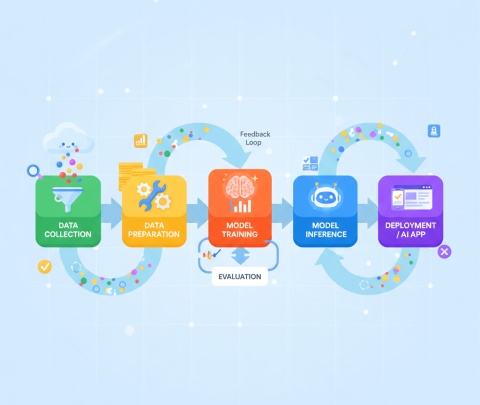
Diagram showing data flowing through a machine learning pipeline

Machine learning is the foundation that almost all modern AI is built on. Despite the complex-sounding name, the core idea is straightforward: instead of programming a computer with explicit rules for every situation, you show it lots of examples and let it figure out the patterns on its own. This simple shift in approach is what made self-driving cars, voice assistants, medical diagnosis AI, and language models like ChatGPT possible.

Traditional Programming vs. Machine Learning

In traditional programming, a developer writes rules: "If the email contains 'free money' and comes from an unknown sender, mark it as spam." The programmer must anticipate every pattern.

In machine learning, you take a different approach: show the computer thousands of emails that humans have already labeled as "spam" or "not spam," and let an algorithm find the patterns that distinguish them. The system learns its own rules — including subtle patterns no human programmer would think to code.

The Three Main Types

Supervised Learning

The most common type. You provide labeled training data — inputs paired with correct outputs — and the algorithm learns to map between them. Examples:

  • Photos labeled "cat" or "dog" → image classifier
  • House features (size, location, age) paired with sale prices → price predictor
  • Email text paired with "spam/not spam" labels → spam filter

Unsupervised Learning

The data has no labels. The algorithm finds hidden structure on its own. Examples:

  • Grouping customers by purchasing behavior (clustering)
  • Reducing complex data to its most important dimensions
  • Detecting unusual patterns that might indicate fraud

Reinforcement Learning

An agent learns by trial and error in an environment, receiving rewards for good outcomes and penalties for bad ones. This is how DeepMind's AlphaGo learned to play Go at superhuman levels, and how robots learn to walk. It's also used in the fine-tuning step of ChatGPT (RLHF — reinforcement learning from human feedback).

Neural Networks: The Building Blocks

A neural network is a specific type of machine learning model inspired (loosely) by the brain. It consists of layers of interconnected nodes ("neurons"). Data flows in through the input layer, gets processed through one or more hidden layers, and produces an output.

Each connection between neurons has a "weight" — a number that determines how much influence one neuron has on the next. During training, these weights are adjusted millions or billions of times until the network produces accurate outputs. A neural network with many hidden layers is called a deep neural network, and training one is called deep learning.

Why Data Quality Matters More Than Anything

The single most important factor in machine learning isn't the algorithm — it's the data. An old saying in the field captures this: "garbage in, garbage out." A model trained on biased, incomplete, or noisy data will produce biased, incomplete, or noisy results, no matter how sophisticated the algorithm.

This is why many of the ethical concerns about AI trace back to training data: if a hiring algorithm is trained on historical hiring decisions that were biased against certain groups, the algorithm will learn and reproduce those biases.

When Machine Learning Works Best

ML excels when:

  • The problem involves finding patterns in large amounts of data
  • The patterns are too complex for humans to articulate as explicit rules
  • Good training data is available
  • The problem has a clear, measurable outcome

ML struggles when data is scarce, the domain requires common-sense reasoning about the physical world, or the consequences of errors are high and unpredictable.

Key Terms to Know

TrainingThe process of feeding data to a model so it can learn patterns
ModelThe learned system that can make predictions on new data
ParametersThe adjustable numbers inside a model (GPT-4 has over 1 trillion)
OverfittingWhen a model memorizes training data instead of learning general patterns
InferenceUsing a trained model to make predictions on new, unseen data
🎨 The Artists and the Algorithms: AI-Generated Images
Split view: artist painting on one side, AI-generated art on the other

In September 2022, an AI-generated artwork won first place at the Colorado State Fair's fine arts competition, and the art world erupted in debate. Tools like Midjourney, DALL-E, and Stable Diffusion can now generate strikingly detailed images from text descriptions in seconds. They've created a new creative medium — and one of AI's most contentious cultural flashpoints, raising fundamental questions about authorship, copyright, and the nature of creativity.

How Image Generation Works

Modern image generators use a technique called diffusion. The training process works backwards from what you might expect:

  1. Start with a real image from the training dataset
  2. Gradually add random noise until the image becomes pure static
  3. Train a neural network to reverse each step — to predict and remove a little bit of noise at a time

To generate a new image, you start with pure random noise and run the denoising process repeatedly. A text prompt guides the process by steering the denoising toward an image that matches the description. After typically 20-50 steps, a coherent image emerges from the noise.

The results can be remarkable: photorealistic portraits of people who don't exist, impossible architectural designs, illustrations in any artistic style, and surreal compositions limited only by what you can describe.

The Copyright Controversy

The most heated debate centers on training data. These models were trained on billions of images scraped from the internet — many created by professional artists who were never asked for permission or compensated.

Several major lawsuits are working through the courts:

  • Getty Images v. Stability AI: Getty sued over the alleged use of 12 million copyrighted images for training Stable Diffusion.
  • Andersen v. Stability AI: A class action by artists Sarah Andersen, Kelly McKernan, and Karla Ortiz arguing that AI image generation constitutes copyright infringement.
  • US Copyright Office rulings: The office has generally ruled that AI-generated images cannot receive copyright protection on their own, though images with significant human creative input in the process may qualify.

Impact on Creative Industries

The effects are already measurable. Concept art studios report declining freelance rates. Stock photography companies have seen shifts in revenue. Some game studios and advertising agencies have adopted AI tools for rapid prototyping, reducing the hours billed for initial concept work.

But the picture isn't purely negative. Many artists have incorporated AI tools into their workflows — using them for ideation, mood boards, texture generation, and starting points that they then refine by hand. New creative roles are emerging around "prompt engineering" and AI-assisted design. And some artists are finding that their hand-made work is more valued precisely because it's human-created.

The Technology Keeps Advancing

Each generation improves dramatically. Early diffusion models (2022) struggled with hands, text, and consistency. Current models can generate coherent text in images, maintain character consistency across multiple images, and even generate short video clips. OpenAI's Sora and Runway's Gen-3 demonstrate that AI video generation is following the same rapid improvement curve that images did.

Where Things Stand

This is an area where reasonable people disagree strongly. The technology is genuinely impressive and opens creative possibilities that didn't exist before. The ethical concerns about training data and economic impact on working artists are also legitimate and unresolved. Courts, legislatures, and the creative community are working through these questions in real time — and the answers will shape how AI and human creativity coexist.

🚗 Self-Driving Cars: Where Are We Actually?
Autonomous vehicle on a city street with LiDAR sensor visualization

Self-driving cars have been "five years away" for over a decade. But while fully autonomous vehicles haven't replaced human drivers, they are operating commercially in specific cities right now. Waymo completes over 150,000 paid rides per week across San Francisco, Phoenix, Los Angeles, and Austin — with no human driver behind the wheel. The reality of autonomous driving in 2025 is more nuanced and more interesting than either the hype or the skepticism suggests.

The Levels of Autonomy

The SAE (Society of Automotive Engineers) defines six levels of driving automation:

  • Level 0: No automation (human does everything)
  • Level 1: Driver assistance (adaptive cruise control)
  • Level 2: Partial automation — car can steer and accelerate/brake, but driver must stay attentive. This is where Tesla Autopilot and most advanced driver-assist systems operate.
  • Level 3: Conditional automation — the car drives itself in specific conditions, and the driver can look away but must be ready to take over. Mercedes Drive Pilot is the first Level 3 system certified for US roads (in Nevada and California, at speeds under 40 mph).
  • Level 4: High automation — the car handles all driving in a defined area with no human intervention needed. This is where Waymo operates.
  • Level 5: Full automation anywhere, any conditions. This doesn't exist yet.

How They Work

Autonomous vehicles combine multiple AI systems:

  • Perception: Cameras, LiDAR (laser radar), and radar sensors create a 360-degree 3D map of the environment, updated many times per second. Deep learning models identify objects — cars, pedestrians, cyclists, traffic lights, lane markings.
  • Prediction: The system predicts what every detected object is likely to do next — will that pedestrian step into the road? Is that car about to change lanes?
  • Planning: Based on perception and prediction, the system generates a safe driving path, accounting for traffic rules, comfort, and efficiency.
  • Control: The planned path is translated into steering, acceleration, and braking commands.

The LiDAR vs. Camera Debate

A major technical disagreement divides the industry. Waymo, Cruise, and most robotaxi companies use LiDAR — expensive laser sensors that directly measure distance to objects with centimeter precision. Tesla's approach relies on cameras only, arguing that if humans can drive with just vision, AI should be able to as well.

LiDAR provides more reliable depth information, especially in challenging lighting conditions. Cameras are cheaper and don't require specialized hardware, but must infer depth from 2D images — a harder AI problem. The debate remains unresolved, though Waymo's operational safety record is currently the strongest in the industry.

Safety: What the Data Shows

Waymo published peer-reviewed data showing its vehicles were involved in significantly fewer injury-causing crashes compared to human drivers in the same areas. Across over 7 million miles of rider-only driving, Waymo reported an 85% reduction in injury-causing crashes and a 57% reduction in police-reported crashes compared to human baselines.

However, context matters: Waymo operates in carefully selected cities with good weather and well-maintained roads. It avoids the most challenging conditions (heavy snow, unmapped rural roads) that human drivers navigate routinely. The question isn't whether autonomous vehicles can be safe in controlled environments — they clearly can — but how broadly that safety extends.

What's Holding Things Back

  • Edge cases: Autonomous vehicles struggle with unusual situations — construction zones, fallen debris, unusual vehicle behavior, hand signals from traffic officers. These rare but important scenarios are hard to train for.
  • Weather: Heavy rain, snow, and fog significantly degrade sensor performance.
  • Regulation: Rules vary dramatically by state and country, creating a patchwork of where autonomous vehicles can legally operate.
  • Cost: Waymo's vehicles carry over $100,000 in sensors and computing hardware, on top of the base vehicle cost.

The Realistic Outlook

Autonomous driving is real and working — in specific, well-mapped urban areas with favorable conditions. Expansion is happening steadily but incrementally. The "robotaxi everywhere" future is coming, but it's arriving city by city, route by route, not all at once.

🌦️ AI Weather Forecasting: Better Than Supercomputers?
Satellite view of a hurricane with AI prediction overlay paths

For decades, weather forecasting has relied on massive supercomputers solving physics equations that describe atmospheric behavior. In 2023, a quiet revolution began: AI models from Google DeepMind, Huawei, and others started outperforming these traditional systems — generating forecasts in minutes on a single computer that previously required hours on machines costing hundreds of millions of dollars. It's one of the clearest examples of AI delivering measurable, immediate real-world value.

How Traditional Weather Forecasting Works

Conventional numerical weather prediction (NWP) divides Earth's atmosphere into a 3D grid of cells — each roughly 9-25 km across — and solves the equations of fluid dynamics, thermodynamics, and radiation for each cell, projecting forward in small time steps. This requires enormous computing power. The European Centre for Medium-Range Weather Forecasts (ECMWF) runs one of the world's most powerful supercomputers to produce its widely-used forecasts.

How AI Does It Differently

AI weather models skip the physics equations entirely. Instead, they learn patterns from decades of historical weather data — what atmospheric conditions at time T tend to lead to at time T+6 hours, T+12 hours, and so on. Key systems include:

  • Google DeepMind's GenCast (2024): A diffusion-based model (similar to AI image generators) that produces probabilistic forecasts — not just one prediction, but an ensemble of possible outcomes with probabilities. In a study published in Nature, GenCast outperformed the ECMWF's ensemble forecast (ENS) on 97% of tested targets across 1,320 combinations of variables, lead times, and pressure levels.
  • Huawei's Pangu-Weather (2023): One of the first AI models to demonstrate competitive accuracy with operational NWP systems, generating 5-day global forecasts in seconds rather than hours.
  • Google's GraphCast (2023): Outperformed the ECMWF's deterministic forecast (HRES) on 90% of tested variables for 10-day predictions.

Why This Matters

The practical implications are significant:

  • Speed: A forecast that takes a supercomputer 1-2 hours to compute can be generated by an AI model in under a minute on a single GPU. This means forecasts can be updated more frequently and more scenarios can be tested.
  • Tropical cyclones: GenCast predicted tropical cyclone tracks more accurately than traditional models, especially at longer lead times (5-7 days). Better track forecasts directly translate to better evacuation decisions.
  • Extreme events: AI models are showing improved skill at predicting extreme weather events — heat waves, heavy rainfall, and wind storms — which disproportionately impact vulnerable communities.
  • Accessibility: Countries that can't afford billion-dollar supercomputers can now potentially run state-of-the-art weather models on commodity hardware.

Limitations and the Hybrid Future

AI weather models aren't perfect replacements for physics-based systems:

  • They're trained on historical data, so they may struggle with unprecedented climate conditions as global warming pushes the atmosphere into states not well-represented in the training data.
  • They currently rely on traditional systems for initial atmospheric observations — the AI needs a starting snapshot of current conditions.
  • At very high resolution (neighborhood-scale predictions), traditional models still have advantages.

The likely future is hybrid: AI models handling medium-range global forecasting where they excel, combined with physics-based models for specific applications where physical understanding is essential. National weather agencies, including ECMWF, are actively integrating AI approaches into their operational systems.

⚠️ Deepfakes and Misinformation: A Real and Growing Threat
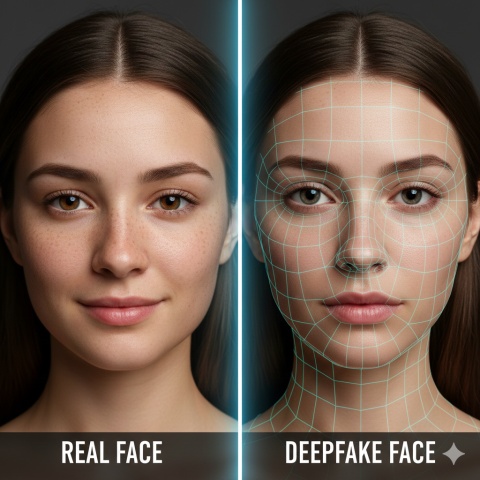
Side-by-side comparison of a real face and a deepfake version

In January 2024, AI-generated audio of President Biden telling New Hampshire voters not to vote in the primary was sent to thousands of households via robocall. In Hong Kong, an employee transferred $25 million to scammers after a video call where every participant — including the company's CFO — was a deepfake. These aren't hypothetical scenarios. Deepfake technology has matured to the point where fabricated audio, video, and images are being used for fraud, political manipulation, and harassment at a scale that demands attention.

What Are Deepfakes?

Deepfakes are synthetic media — audio, video, or images — generated or manipulated by AI to appear authentic. The term comes from "deep learning" + "fake." Modern deepfakes use generative adversarial networks (GANs), diffusion models, and voice cloning systems to produce results that are increasingly difficult to distinguish from genuine recordings.

Documented Harms

The harms from deepfakes are not speculative — they are documented and growing:

Financial Fraud

  • The Hong Kong case (February 2024): Scammers used deepfake video of multiple company executives on a live video call to authorize a $25 million transfer.
  • AI voice cloning scams: Criminals clone a family member's voice from social media clips and call relatives claiming to be in an emergency, requesting immediate wire transfers. The FBI has issued warnings about this growing trend.

Political Manipulation

  • The Biden robocall (January 2024): AI-generated audio mimicking President Biden's voice was used to discourage voting in New Hampshire's primary. The responsible party was later identified and fined.
  • In Slovakia's 2023 election, a fabricated audio recording of a liberal candidate discussing vote-rigging circulated on social media days before the vote, when fact-checking couldn't reach most voters in time.
  • During the 2024 election cycle, both AI-generated images and audio clips of candidates circulated widely before being debunked.

Non-Consensual Imagery

The largest category of deepfakes by volume involves non-consensual intimate imagery — AI-generated sexual content using real people's likenesses. A 2023 study found that 98% of deepfake videos online are of this type, overwhelmingly targeting women. In January 2024, AI-generated explicit images of Taylor Swift went viral on X (Twitter), reaching tens of millions of views before platforms could remove them. High school students in multiple countries have been caught generating similar content of classmates.

Detection: An Arms Race

Detecting deepfakes is an active area of research, but it's fundamentally asymmetric — generation is becoming easier faster than detection is improving:

  • Artifact detection: Early deepfakes had telltale artifacts — unnatural blinking, skin texture inconsistencies, audio glitches. Modern systems have largely eliminated these.
  • Statistical analysis: Deepfake detectors analyze subtle patterns invisible to humans — compression artifacts, noise patterns, frequency analysis. These work in controlled settings but degrade when videos are compressed for social media.
  • Provenance systems: The C2PA (Coalition for Content Provenance and Authenticity), backed by Adobe, Microsoft, Google, and major camera manufacturers, is building systems that cryptographically sign content at the point of creation. This "proof of origin" approach may be more viable long-term than trying to detect fakes after the fact.

Legal and Regulatory Response

Legislation is catching up, though unevenly:

  • The EU's AI Act includes provisions requiring disclosure when content is AI-generated.
  • Over 40 US states have passed or proposed laws specifically targeting deepfakes, particularly non-consensual imagery and election-related deception.
  • The UK's Online Safety Act criminalizes sharing deepfake intimate images without consent.

What You Can Do

Until technology and regulation catch up, awareness is the best defense:

  • Be skeptical of emotionally charged audio or video that appears just before an election or during a crisis
  • Check if the content has been verified by the person or organization allegedly depicted
  • Look for reporting from established news organizations before sharing viral claims
  • For financial requests, verify through a separate communication channel — call the person directly on a known number
🔓 Open Source AI: The Movement Changing Everything
Laptop screen showing a model hub with community collaboration interface

In July 2023, Meta released Llama 2 — a large language model competitive with ChatGPT — and made it free for almost anyone to download, modify, and deploy. It was downloaded millions of times within weeks. This kicked off an explosion of open AI development that is reshaping the balance of power in the industry. Today, open-weight models from Meta (Llama 3), Mistral, and others are used by hundreds of thousands of developers and organizations worldwide, and some benchmarks show them rivaling or exceeding proprietary alternatives.

What "Open" Means in AI

The term "open source" is used loosely in AI. Traditional open source means the full source code is available to use, modify, and redistribute. In AI, there are different levels of openness:

  • Open weights: The trained model parameters are released, so anyone can run the model. This is what Meta's Llama and Mistral's models provide. You can use them but you couldn't reproduce the training process without the code and data.
  • Open training data: The actual data used to train the model is available. Very few large models do this, though some projects like EleutherAI's The Pile are notable exceptions.
  • Fully open: Code, data, training process, and weights are all available. This is rare for frontier models due to the enormous cost of training.

The Key Players

  • Meta (Llama series): The most impactful open release. Llama 3 (released 2024) comes in sizes from 8B to 405B parameters. The 70B version is widely considered the best open-weight model and is competitive with GPT-4 on many benchmarks.
  • Mistral: A French AI startup that has released several strong open models. Mistral 7B (2023) demonstrated that smaller, well-trained models could compete with much larger ones. Their Mixtral model uses a "mixture of experts" architecture for efficient performance.
  • Stability AI: Released Stable Diffusion, the most widely used open image generation model. Despite financial difficulties as a company, the model spawned an enormous ecosystem of community-created variants and tools.
  • Hugging Face: The platform that hosts and distributes open AI models. With over 500,000 models and 100,000 datasets, it's become the central hub of the open AI ecosystem — essentially the GitHub of machine learning.

Why Openness Matters

For Research

Open models let researchers study how AI systems work — testing for biases, understanding failure modes, and developing safety techniques. When models are closed, independent research depends on API access that can be revoked or changed at any time.

For Safety

This is counterintuitive but important: many AI safety researchers argue that open models are more safe than closed ones, because they enable independent auditing. Thousands of researchers testing a model will find problems faster than any internal team. Closed models require trusting the developing company to find and disclose all safety issues.

For Competition

Without open models, the AI industry would be dominated by a handful of companies with the resources to train frontier models — primarily OpenAI, Google, and Anthropic. Open models lower the barrier to entry, enabling startups, universities, and smaller companies to build competitive AI products. This competition benefits users through lower prices, more choices, and faster innovation.

For Privacy and Sovereignty

Open models can be run locally — on a company's own servers or even on personal computers. This means sensitive data (medical records, legal documents, proprietary code) never has to be sent to a third-party API. For governments and organizations with strict data sovereignty requirements, this is often the deciding factor.

The Tension: Openness vs. Risk

Not everyone agrees that openness is beneficial. Critics argue that releasing powerful AI models publicly:

  • Makes it easier for bad actors to use AI for harmful purposes (generating misinformation, assisting in cyberattacks)
  • Removes the ability to revoke access if a model is found to be dangerous
  • Can be used to accelerate weapons development or surveillance capabilities

The debate remains active and unresolved. Meta argues that the benefits of broad access outweigh the risks. Google and OpenAI have been more cautious with their frontier models. Anthropic publishes extensive safety research but keeps its models proprietary. There's legitimate merit on both sides.

The State of Play

As of early 2025, the open AI ecosystem is thriving. Llama 3 models run on consumer hardware (the 8B version runs on a laptop). Community fine-tunes — models adapted for specific tasks like coding, medical questions, or different languages — number in the tens of thousands. The gap between open and proprietary models has narrowed from years to months.

Whatever your view on the safety debate, the practical reality is clear: open AI models have democratized access to technology that was, until recently, available only inside a few elite labs. That's a profound shift, and its full implications are still unfolding.